When you have Inflammatory Bowel Disease (IBD), one of the first questions you might ask your doctor is, “What should I eat?” While everyone’s body is different, scientists have long suspected that red meat (like beef, lamb, and pork) might be a trigger for painful flares.
A significant new study released on June 24, 2026, has finally shed light on why this happens and, more importantly, how choosing different types of protein can actually help protect your gut.
The Problem with Red Meat
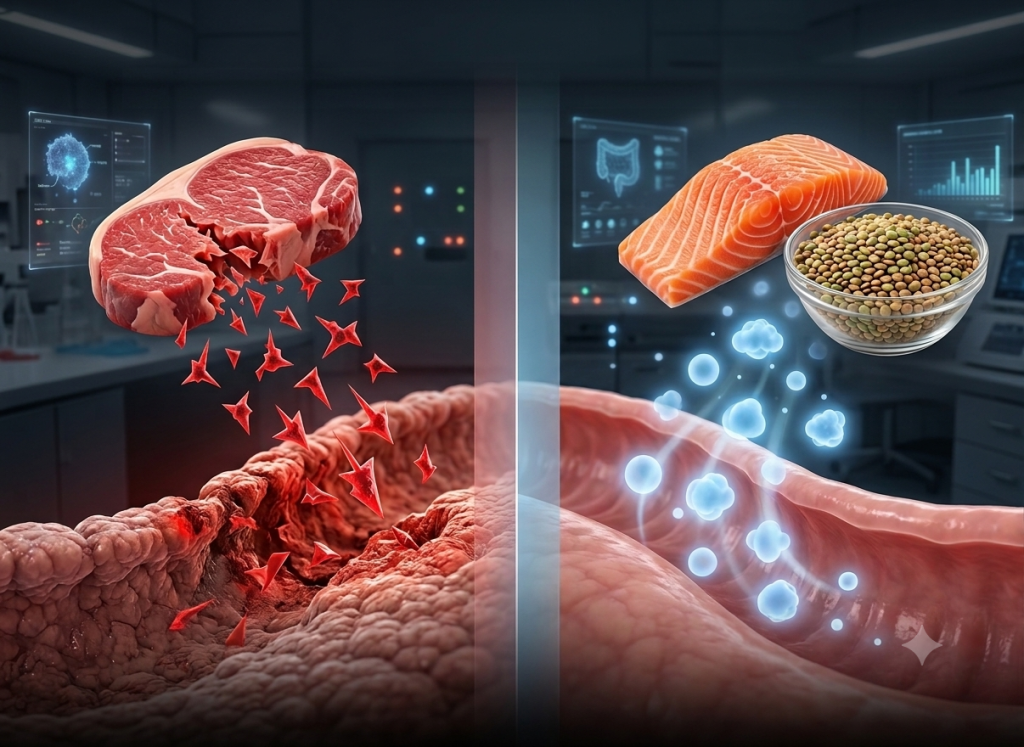
For years, patients have noticed that eating a lot of red meat often leads to more symptoms. This latest research explains that red meat contains certain compounds that, when broken down in the gut, can send the immune system into “overdrive.” This extra activity causes the gut lining to become red and swollen, making Crohn’s disease or ulcerative colitis harder to manage.
It isn’t just about the meat itself; it’s about how your body’s immune cells react to it. When the gut is already sensitive, these specific proteins can act like “fuel” for the fire of inflammation.
Protective Proteins: The Good News
The study didn’t just find a problem; it found a solution. Researchers discovered that while red meat might worsen the situation, other protein sources can actually act like a shield for the gut.
Choosing proteins like fish, poultry (chicken or turkey), and plant-based options like beans or lentils appeared to support a healthier gut environment. These proteins don’t seem to trigger the same “alarm bells” in the immune system, allowing the gut lining to stay stronger and more stable.
What This Means for You
This doesn’t necessarily mean you can never have a burger again, but it does suggest that variety and moderation are key. By swapping some of your red meat meals for fish or plant-based proteins, you might be giving your gut a much-needed break from inflammation.
By understanding the “why” behind red meat triggers, doctors are getting better at giving specific dietary advice that helps keep patients feeling healthy and out of the hospital.
Read the Research for Yourself
- News-Medical Report: Study sheds light on why red meat may worsen inflammatory bowel disease
- Nature Portfolio Context: Latest research on dietary impacts and mucosal destruction
- International Guidance: Official IOIBD recommendations on diet and IBD


Leave a Reply