What is IBD?
Inflammatory Bowel Disease (IBD), which includes Crohn’s disease and ulcerative colitis, is a lifelong condition that makes the inside of the intestine very red, sore, and swollen. Normally, your immune system protects you from germs, but in people with IBD, the immune system gets confused and starts attacking the gut by mistake.
Meet the “Peacekeepers” and the “Warriors”
Inside your body, your immune system has different types of “soldiers” called T-cells:
- Treg cells (The Peacekeepers): These are very important for keeping things calm. Their job is to stop the immune system from overreacting and to prevent diseases like IBD.
- Th17 cells (The Warriors): These cells are built to fight, but when there are too many of them or they get too aggressive, they cause the painful inflammation seen in IBD.
In a healthy gut, these two groups are balanced. In someone with IBD, there is often an imbalance – too many warriors and not enough peacekeepers.
The Big Discovery: The FAM234A “Switch”
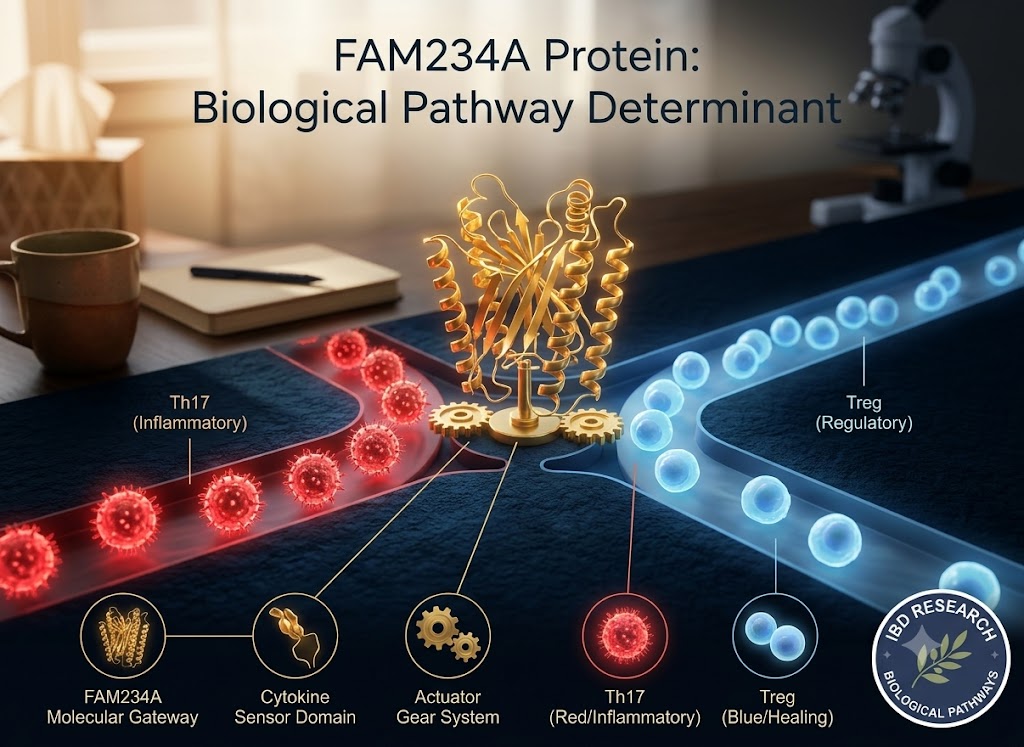
New research published today has found a specific protein called FAM234A that acts like a master switch.
Think of FAM234A as a boss at a factory who decides what job the new workers will do. When a new T-cell is made, FAM234A helps decide if that cell will become a Warrior (Th17) or a Peacekeeper (Treg).
Why does this matter for patients?
Because this protein acts as a switch, scientists believe they might be able to find a way to “flip” it. If they can use medicine to tell FAM234A to make more peacekeepers and fewer warriors, they could potentially control the inflammation and help the gut heal.
What’s Next?
This is a brand-new discovery. While it doesn’t mean a new medicine is ready today, it gives doctors a totally new target to aim for. By understanding how this “switch” works, researchers are one step closer to finding better ways to help people with IBD feel healthy again.
 IBD Science for Patients
Leave a comment