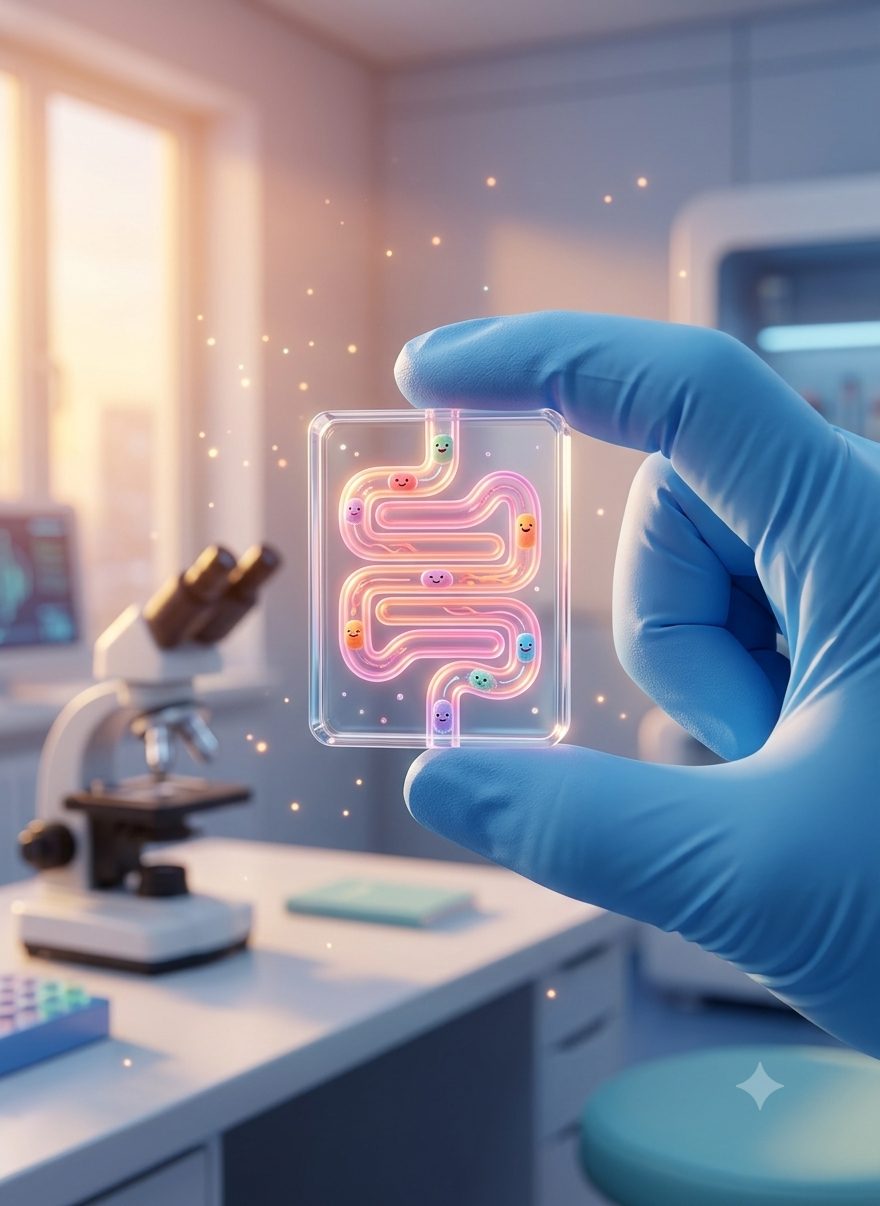
Imagine if doctors could test a brand-new medicine for your stomach without you ever having to swallow a single pill. It sounds like science fiction, but it is happening right now!
In May 2026, research was highlighted in the journal Nature Reviews Drug Discovery about a cool new technology called “IBD-on-a-chip“.
What is a “Mini-Gut”?
An IBD-on-a-chip is a tiny, clear piece of plastic, about the size of a computer thumb drive, that has real human gut cells living inside it. It isn’t just a flat piece of plastic; it has tiny tunnels that mimic the way a real intestine works. Scientists can even make these cells act like they have Crohn’s disease or ulcerative colitis so they can study the disease up close.
The “Toy Gut” for Scientists
Think of it like a “toy gut” or a high-tech model. Because the chip uses real human cells, scientists can watch exactly how IBD behaves in real-time. They can see how the cells get red and swollen and, more importantly, they can see which medicines stop that from happening.
Why is this so exciting?
Before this technology, testing new drugs was very slow because it is difficult and risky to test them on people first. With the mini-gut on a chip, researchers can:
- Test many drugs at once: They can try out different medicines at the same time to see which ones work best.
- Find cures faster: Researchers can get results in days instead of waiting years for long human studies.
- Keep patients safe: This helps make sure a medicine is safe and effective on the chip before a person ever has to try it.
This tiny chip is a giant step forward in making sure that one day, everyone with IBD can have a treatment that is made just for them!


Leave a Reply