Living with Crohn’s disease is challenging enough, but for about one in four patients, the condition leads to a particularly painful complication called perianal fistulas. These are small, abnormal tunnels that form between the end of the bowel and the skin near the bottom. They can cause swelling, pain, and constant drainage, making daily life very difficult.
However, brand-new data from a Phase 3 clinical trial called FUZION suggests that a medicine called Guselkumab (brand name Tremfya) could be a game-changer for those struggling with this specific type of Crohn’s.
What the Research Found
The results, presented at the Digestive Disease Week (DDW) 2026 conference, showed that Guselkumab was significantly better at healing fistulas than a placebo (a dummy treatment).
In the study, patients were given different doses of the medicine. After 24 weeks, researchers used a very strict test to see if the patients were in “remission.” This didn’t just mean the skin looked healed on the outside; they used MRI scans to make sure there was no hidden fluid or inflammation left inside the tunnels.
The results were impressive:
- 28.3% of patients on the standard dose achieved full healing.
- Only 10.3% of patients on the placebo reached that same level of healing.
How Does It Work?
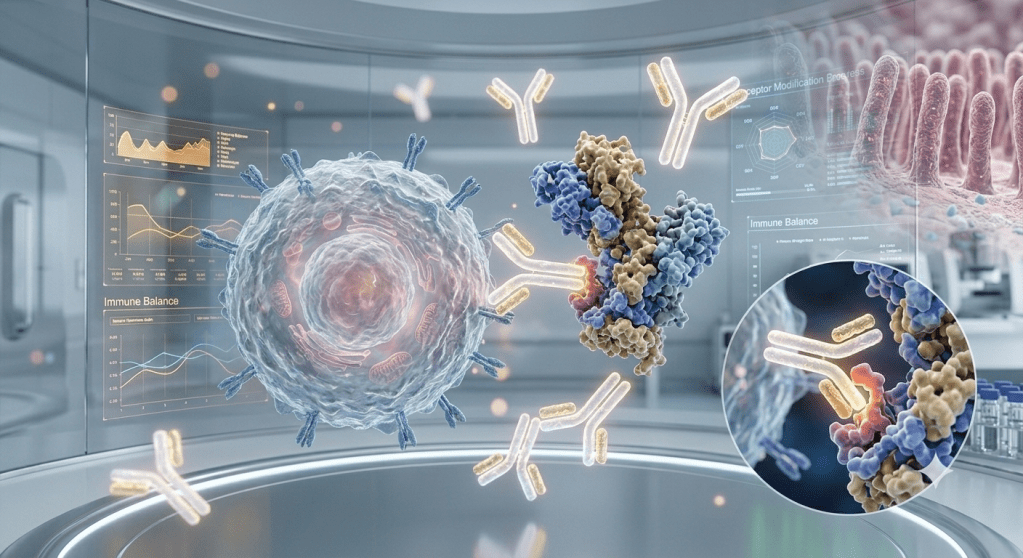
Guselkumab is a type of “monoclonal antibody.” It works by blocking a specific protein in the body called IL-23, which is a major “driver” of the inflammation that causes Crohn’s disease. By switching off this protein, the body can finally start to close and heal these painful tunnels.
Why This Matters to You as a Patient
If you have perianal Crohn’s disease, you know that finding a treatment that actually closes a fistula and keeps it closed is incredibly hard. Historically, doctors have relied on a different class of drugs called “anti-TNFs,” but these don’t work for everyone, and fistulas often come back.
Guselkumab is the first and only IL-23 inhibitor to prove that it can successfully treat these fistulas in a large-scale study. This matters because:
- New Options: If other biologics haven’t worked for you, this offers a completely different way to fight the disease.
- Durable Healing: The goal is to achieve “durable closure”—meaning the fistula stays closed without needing repeated surgeries or painful “setons” (surgical threads used for drainage).
- Better Quality of Life: Healing these tunnels can stop the pain and drainage that often prevents patients from enjoying their daily activities.
While doctors are still waiting to see the “long-term” data (beyond 24 weeks), this is a big step forward in treating one of the most difficult parts of Crohn’s disease.


Leave a Reply