When a child is hospitalised with a severe flare-up of ulcerative colitis, it is a very stressful time for the whole family. The first step for doctors is usually to give strong steroids to calm the inflammation as quickly as possible. However, steroids do not work for every child, and some may eventually need surgery to remove their colon.
A new study published in GI & Hepatology News has found that a simple, painless ultrasound scan can help doctors predict, very early on, whether steroids are likely to work or if a child might need more advanced treatment.
The “5 mm” Rule
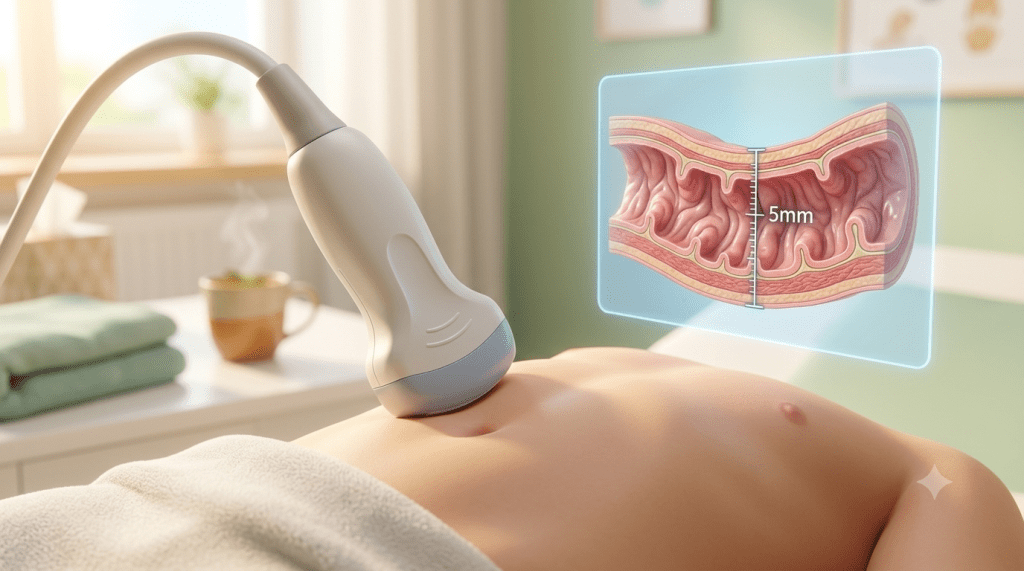
The research focused on measuring the thickness of the bowel wall. When the gut is very inflamed, the walls become thick and swollen. By using intestinal ultrasound, researchers discovered a specific “cutoff” point that helps predict the future path of the disease.
They found that children whose left-colon wall thickness was greater than 5 mm were much more likely to “fail” steroid treatment and eventually require surgery. This measurement acts like an early warning system, giving doctors a look at what is happening inside the gut without needing a more invasive test like a colonoscopy.
Why This Matters to You as a Patient or Parent
If your child is facing severe colitis, this discovery is a major step forward in personalised medicine.
- Faster Decisions: Instead of waiting days or even weeks to see if a medicine is working, doctors can use this ultrasound measurement to make life-changing decisions much sooner.
- Getting the Right Care Sooner: For children with a bowel wall thickness over 5 mm, doctors might decide to skip a long course of steroids that is unlikely to help and move straight to more powerful “biologic” therapies or discuss surgical options earlier.
- A Gentle Approach: Ultrasound is a “child-friendly” test. It doesn’t involve needles, radiation, or being put to sleep, which makes it much less frightening for children who are already feeling very unwell.
By using technology to predict which treatments will work best for each individual, doctors can ensure that every child gets the most effective care as quickly as possible, reducing the time they spend in the hospital and helping them get back to being a kid.


Leave a Reply