For many people living with Crohn’s disease, one of the most difficult complications is perianal disease. This can lead to painful fistulas – small tunnels that form between the end of the bowel and the skin. These tunnels can cause drainage, abscesses, and significant pain, and they have historically been very hard to heal completely.
However, a new large-scale study has found that a medicine called Upadacitinib is helping patients achieve “deep healing” that can actually be seen on medical scans.
What the Study Found
The research followed 125 patients across the US and Canada, making it the largest “real-world” study of its kind for this specific type of Crohn’s. The results showed that Upadacitinib was associated with significant clinical and radiologic (imaging) improvements.
At the first follow-up visit:
- 45.5% of patients saw their symptoms improve.
- 39.4% reached clinical remission, meaning their symptoms mostly disappeared.
- Two-thirds of patients who had MRI scans showed that their fistulas were either improving or completely healed internally.
The Power of “Deep Healing”
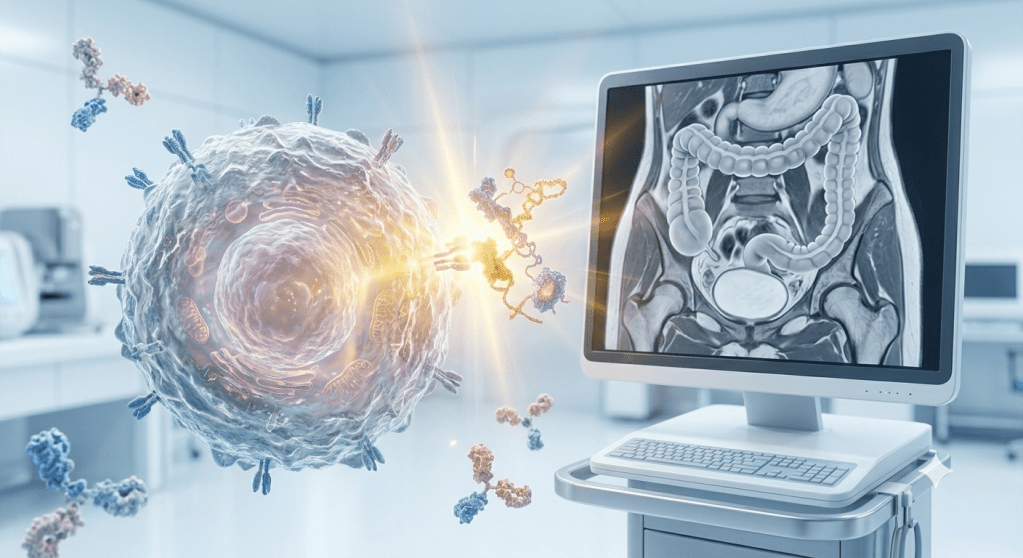
One of the most important parts of this study is the use of pelvic MRI scans to check for healing. Dr. Parakkal Deepak, one of the study’s authors, explained that simply looking at the skin on the outside can be misleading.
A fistula might look “closed” on the surface, but the tunnel could still be active deep inside. Using MRI allows doctors to see “deep healing,” which is the best way to make sure the disease is truly under control.
Timing is Everything
The researchers found that Upadacitinib worked best when it was started early. Patients who had lived with perianal disease for two years or less had much higher response rates than those who had been struggling with it for a long time. It also worked more effectively for patients who had not yet tried other strong treatments called anti-TNFs.
Why This Matters to You as a Patient
If you are struggling with perianal Crohn’s, this research is a major reason for optimism.
- A New Tool for Difficult Cases: Even patients who had already tried other biologics saw benefits from Upadacitinib. If other medicines haven’t worked for you, this provides a different way to fight the inflammation.
- Trust the Scans, Not Just the Skin: This study highlights why asking your doctor for an MRI might be important. Knowing if you have “deep healing” helps you and your medical team decide if your treatment is truly working or if it needs to be adjusted.
- Act Early: If you are newly diagnosed or starting to develop perianal symptoms, this research suggests that starting effective treatment quickly can lead to much better long-term results.


Leave a Reply