If you have ever had an operation on your abdomen, you might know that your digestive system doesn’t always wake up straight away. Doctors call this postoperative ileus (POI). It’s a common problem where the intestine simply stops moving after surgery, potentially leading to bloating, pain, vomiting, the placement of an NG tube (a tube that goes up your nose and travels down into your stomach) and longer hospital stays.
For a long time, scientists weren’t sure exactly how the gut “knew” it was being operated on. Now, a study published earlier this month has found the answer: a specific group of touch-sensitive neurons and “messenger” cells that act like an emergency brake for your intestines.
What the Research Found
This was a detailed molecular and experimental study that took several years to complete. It involved high-tech mapping of the nerves and immune cells inside the intestinal muscularis – the “engine room” of your gut.
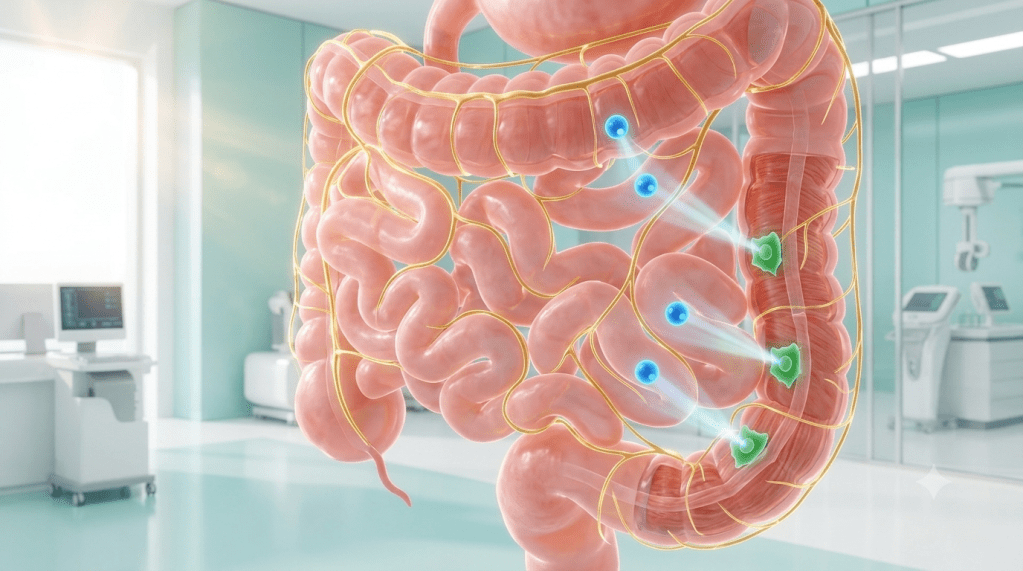
The researchers discovered a three-step chain reaction that shuts the gut down:
- The Touch Sensors: The gut contains special nerves called Piezo2+ neurons. These are like tiny “pressure pads.” When a surgeon handles the bowel during an operation, these sensors detect the physical touch and “fire” off a signal.
- The Messengers: These neurons talk to glial cells (which are like the support staff for your nerves). The glial cells then release a chemical signal that alerts the body’s immune system.
- The Emergency Brake: This signal activates macrophages – the “clean-up crew” of the immune system. Once activated, these macrophages cause temporary inflammation in the muscle layer of the gut, which stops the intestines from squeezing food along.
Why This Matters to You as a Patient
Understanding this “touch-to-inflammation” link is a huge deal for anyone facing surgery:
- Faster Recovery: Now that scientists have found the “emergency brake” (the Piezo2+ neurons), they can work on developing new medications to block it. If we can stop the nerves from firing during surgery, the gut might never shut down in the first place, meaning patients could eat and go home much sooner.
- Gentler Surgery: This research highlights why “minimally invasive” or robotic surgeries are so helpful. By handling the bowel less, surgeons trigger fewer of these “touch sensors,” reducing the risk of the gut falling asleep.
- Better Pain Management: POI is often a major cause of pain after surgery. By preventing the inflammation caused by these macrophages, doctors can reduce the need for heavy painkillers (like opioids), which can sometimes make the gut even more sluggish.
While this study used laboratory models and human tissue samples to map the process, it provides the “instruction manual” that doctors need to make surgery recovery safer and faster for everyone.
Explore the Research
- Original Article: Piezo2+ mechanosensory neurons and glial cells initiate macrophage activation in POI.
- Related Reading: Why the intestinal muscles are the secret to IBD health.


Leave a Reply