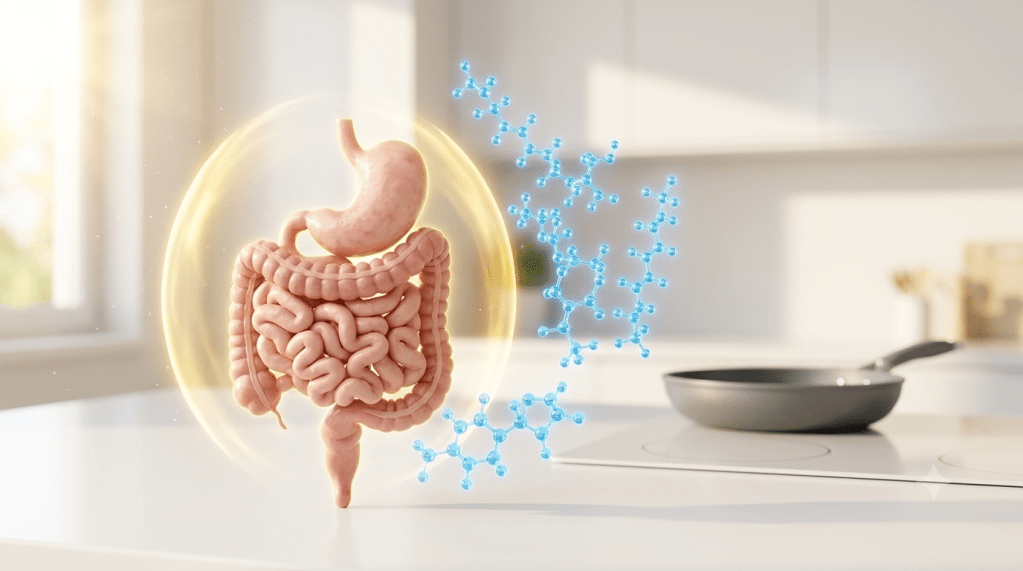
For a long time, doctors have known that genetics play a part in why some people develop inflammatory bowel disease (IBD), but they don’t explain the whole story. Now, a major new study has found a piece of the puzzle in our environment. Researchers have discovered that exposure to PFAS, often called “forever chemicals”, during pregnancy and very early in life is linked to increased gut inflammation in children.
What are PFAS?
Per- and polyfluoroalkyl substances (PFAS) are a huge family of man-made chemicals found in everyday items like non-stick frying pans, food packaging, and even stain-resistant clothes. They are called “forever chemicals” because they don’t break down easily and can stay in our bodies and the environment for a very long time.
What the Research Found
This was a large-scale international study led by the Icahn School of Medicine at Mount Sinai. Instead of looking at just a few people, the researchers followed three different groups (cohorts) of children in the United States and Mexico for up to 11 years.
The team measured PFAS levels in:
- Maternal blood during pregnancy.
- Umbilical cord blood.
- Newborn blood spots.
The results, published in Clinical Gastroenterology and Hepatology, showed that children with higher exposure to these chemical mixtures early in life had higher levels of faecal calprotectin. This is a well-known biomarker that doctors use to track inflammation in the gut.
Why This Matters to You as a Patient
If you or your child is living with IBD, this research is important for several reasons:
- Finding the ‘Hidden’ Causes: Many patients wonder why they developed IBD when no one else in their family has it. This study proves that our environment, the things we touch and eat every day, can have a lasting impact on our gut health from before we are even born.
- Early Warnings: By identifying that PFAS can trigger inflammation early on, scientists hope to find ways to reduce these risks before symptoms even start. This could eventually lead to new prevention strategies for the next generation.
- Safer Living: Understanding that both old (“legacy”) and newer “replacement” PFAS can affect the gut helps us make better choices, like avoiding certain types of non-stick coatings or certain toys that might release these chemicals.
While this study doesn’t say that PFAS cause IBD, it shows they are a significant “trigger” for the inflammation that leads to it. Researchers are now continuing to follow these children to see if those with the highest exposures actually go on to develop Crohn’s or Colitis later in life.
Explore the Research
- Original Article: Per- and polyfluoroalkyl substances in early life and childhood intestinal inflammation.
- Related Reading: How everyday items like stuffed toys can release PFAS.


Leave a Reply