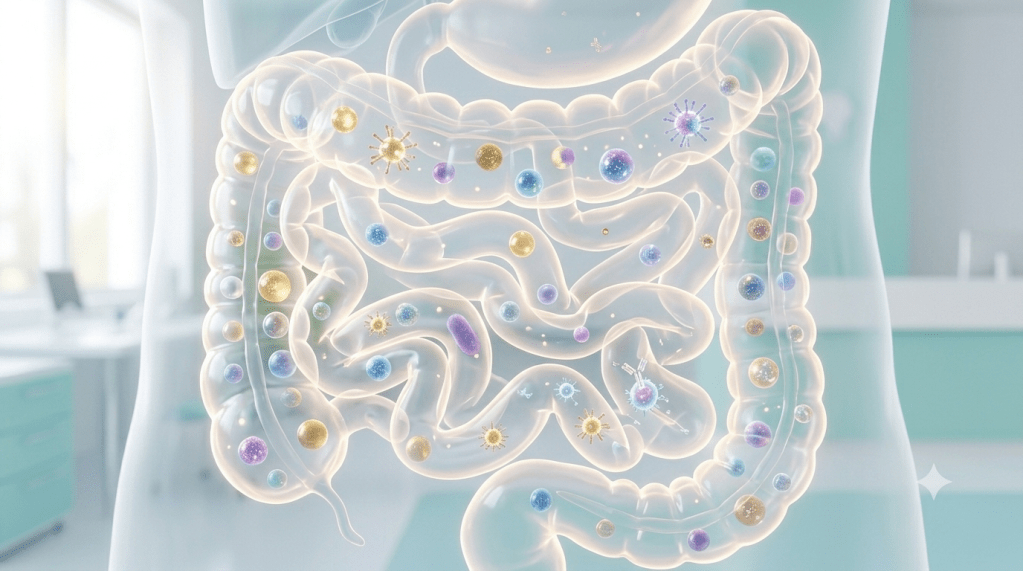
Inside your digestive system, a massive community of trillions of tiny organisms is constantly talking to your immune system. When you have ulcerative colitis (UC), this conversation breaks down. Your immune system gets “confused” and begins to attack your own gut lining.
A new scientific review explores a treatment called Fecal Microbiota Transplantation (FMT). This process, which involves transferring healthy bacteria from a donor into a patient, is being hailed as a way to “reboot” your gut health and retrain your immune system to stop the fire of inflammation.
What the Research Found
This report is a comprehensive scientific review that brings together the latest data on how FMT affects the “mucosa” – the delicate inner skin of your gut. Instead of just looking at one small group, this paper looks at the evidence from many different trials to explain exactly why this treatment works for some people but not others.
Key discoveries include:
- The Immune Peacekeeper: FMT does not just add “good bugs” to your system. It actively changes how your immune cells behave. It helps create a state of microbiota-host homeostasis, which is a fancy way of saying it helps your body and your bacteria live together in harmony again.
- Healing the Shield: The review explains that FMT strengthens the mucosal immune mechanisms. This is your gut’s internal security team. By rebalancing the bacteria, FMT helps this team rebuild the protective barrier that stops toxins from leaking into your bloodstream.
- The Rise of Precision Therapy: Scientists are now moving away from “standard” transplants and toward precision microbiota therapy. This means using data to pick the exact right “bug cocktail” to match a patient’s specific needs.
Study Scale and Context
While this specific paper is a detailed review of the science, the evidence it relies on comes from large-scale data. For example, a related meta-analysis recently evaluated 7 clinical trials involving 542 patients with IBD, proving that these bacterial transplants can significantly improve the chances of reaching long-term remission.
How does the technology work?
- Dysbiotic Gut Ecosystem: Think of your gut like a garden. In IBD, the “weeds” (bad bacteria) have taken over, and the “flowers” (good bacteria) are dying out. FMT is like clearing the weeds and planting fresh, healthy seeds.
- Precision Microbiota Therapy: This is a “new technology” where doctors use Artificial Intelligence and DNA sequencing to look at your specific gut bugs. Instead of a general transplant, they can create a personalised treatment that fills the specific gaps in your “gut garden”.
Why This Matters to You as a Patient
If you are living with ulcerative colitis, this research is a huge step toward a more natural and effective way to manage your health.
- Treating the Root Cause: Most current UC drugs work by suppressing your immune system, which can sometimes leave you open to other infections. FMT and precision therapy focus on fixing the balance of your gut, which aims to solve the problem at its source rather than just masking the symptoms.
- Personalised Hope: This study gives you the scientific proof that your treatment is becoming more tailored to you. In the future, your doctor might use a simple stool or blood test to determine exactly which bacteria you are missing and provide a “designer” transplant to fix it.
- A New Future for Remission: By understanding the “immune mechanisms” mentioned in this review, scientists can now design smart capsules that protect these good bugs so they reach the exact part of your gut that needs healing.
While FMT is still considered an investigational treatment in many places, this research provides the “blueprint” needed to make it a standard, personalised part of your journey toward health.
Explore the Research
- Original Review: FMT in UC: mucosal immune mechanisms and precision therapy.
- Meta-Analysis Data: FMT improves IBD remission in 542 patients.
- Related Reading: How AI is personalising gut therapies.


Leave a Reply