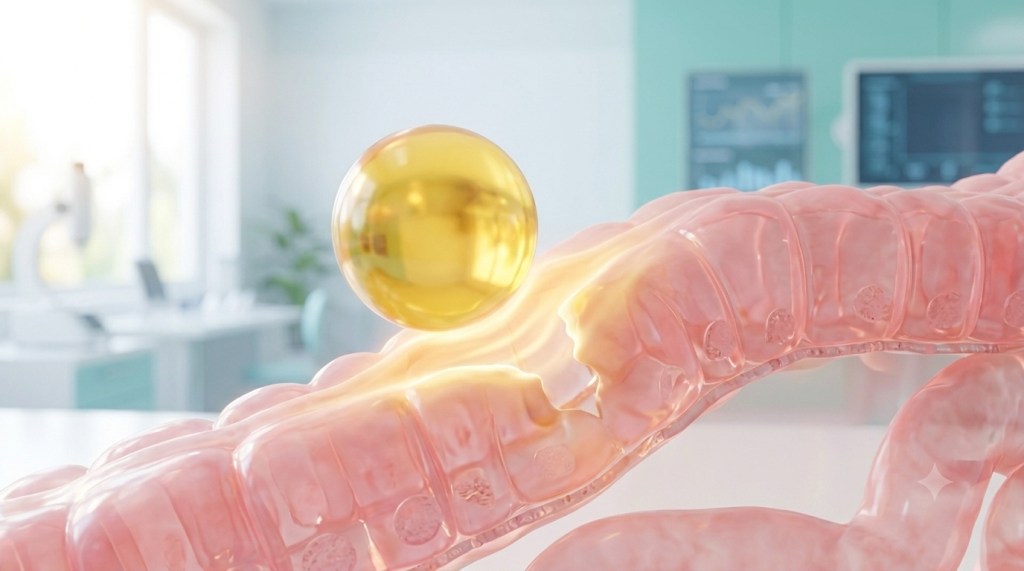
For a long time, doctors have recommended Vitamin D to help keep bones strong. But for those of you living with inflammatory bowel disease (IBD), this simple vitamin might do something even more impressive: it could help your gut lining physically heal itself.
A new scientific review has examined the “therapeutic potential” of Vitamin D, looking at how it helps achieve mucosal healing, which is the ultimate goal of your treatment journey toward health.
What is Mucosal Healing?
In IBD, your immune system causes “sores” or ulcers to form on the delicate inner skin of your gut (the mucosa). Mucosal healing is the medical term for when these sores completely disappear, and the gut lining looks healthy and smooth again under a camera.
Achieving this type of “deep healing” is vital because it means you are much less likely to have a flare-up or need emergency surgery in the future.
What the Research Found
This study was a comprehensive scientific review, which means researchers gathered evidence from dozens of different clinical trials to see if there was a clear pattern.
Key discoveries from the current evidence include:
- The Gut Barrier Guard: Vitamin D acts like a “security guard” for your gut. It strengthens the tight junctions (the glue that holds your gut cells together), which stops toxins and “bad bugs” from leaking into your bloodstream.
- The Immune Off-Switch: The research shows that Vitamin D can help act as an “off-switch” for the aggressive immune cells that cause inflammation, similar to how newly-discovered proteins help regulate the body’s defences.
- Better Response to Meds: Evidence suggests that patients with healthy Vitamin D levels often respond better to advanced treatments like biologics.
Why This Matters to You as a Patient
If you are living with Crohn’s or Colitis, this research gives you the scientific proof that what you supplement your body with can drive your journey toward health.
- A Simple, Low-Cost Tool: While biologics and JAK inhibitors are powerful, Vitamin D is a relatively inexpensive way to support your personalised treatment plan.
- Tracking Your Healing: In the future, your doctor might use simple blood tests to check your Vitamin D levels as part of your routine monitoring to ensure your gut is staying in “deep remission”.
- Beyond the Gut: Many of you experience “outside-the-gut” symptoms like joint pain or fatigue. Vitamin D supports your whole body, not just your digestive system.
Important Safety Note: Always talk to your IBD team before starting high doses of Vitamin D. They can check your blood to find the “perfect dose” for your specific needs. Too much Vitamin D can be harmful to your health.
Explore the Research
- Original Research: https://pubmed.ncbi.nlm.nih.gov/42542748/.
- Related Reading: How diet and gut bugs team up to fight IBD.


Leave a Reply