If you are living with Crohn’s disease or ulcerative colitis, one of the most common and important questions you ask yourself is: “What should I put on my plate?”. While doctors are experts at prescribing medical therapies, patients have long known that what they eat plays a massive role in how their stomach feels and how often flares occur.
Now, a report published in August has gathered decades of nutritional science to explain how food affects inflammatory bowel disease. The British Medical Journal review reveals that while the typical “Western diet” acts like fuel on an inflammatory fire, transitioning to a plant-rich, whole-food way of eating can act as a powerful disease modifier alongside your regular medications.
How the Western Diet Acts as Fuel for Gut Inflammation
The global rise of Crohn’s and colitis over recent decades has closely matched the spread of the Western lifestyle. Western diets are heavily reliant on ultra-processed foods (UPFs), refined sugars, saturated fats, red meats, and artificial emulsifiers.
When you eat a high proportion of these industrialised foods, three damaging biological events happen in your digestive tract:
- Microbiome Disruption: Unhealthy additives reduce the diversity of your beneficial gut bacteria, preventing them from producing short-chain fatty acids (protective natural compounds that keep your intestinal lining calm and strong).
- Gut Barrier Stress: Industrial emulsifiers and unhealthy fats weaken the protective mucus layer of your bowel, making it easier for irritating substances to leak through.
- Overloading Internal Enzymes: The study highlights that eating excess polyunsaturated fats can overwhelm a vital protective enzyme in your gut lining called GPX4 (glutathione peroxidase 4). When GPX4 levels are low, fat stress triggers severe inflammatory alarm signals in your intestinal cells.
Behind the Evidence: A Global Scientific Synthesis
This report is a major international narrative review and evidence synthesis. Rather than monitoring a single group of patients in one hospital, the authors analysed data across hundreds of studies, including large population cohorts, laboratory disease models, and clinical randomised controlled trials involving thousands of adult and paediatric patients.
By looking at the big picture, the researchers were able to compare different dietary patterns side-by-side to discover what they all have in common.
The Dietary Roadmaps: What Works Best for Your Gut?
The review evaluated several leading nutritional approaches used in modern IBD care:
- Exclusive Enteral Nutrition (EEN): A liquid-only formula diet followed for 6 to 8 weeks. EEN is widely used as a first-line treatment to induce remission in children with Crohn’s disease. While highly effective, adults often find staying on liquid-only shakes for two months very difficult.
- Crohn’s Disease Exclusion Diet (CDED) with Partial Enteral Nutrition (PEN): A structured plan that combines mandatory whole foods (such as fresh chicken, eggs, and specific fruits) with liquid formula covering 35 to 50 per cent of daily energy needs. Clinical trials show that CDED with PEN is just as effective as liquid-only EEN for inducing remission, but far easier for patients to stick to.
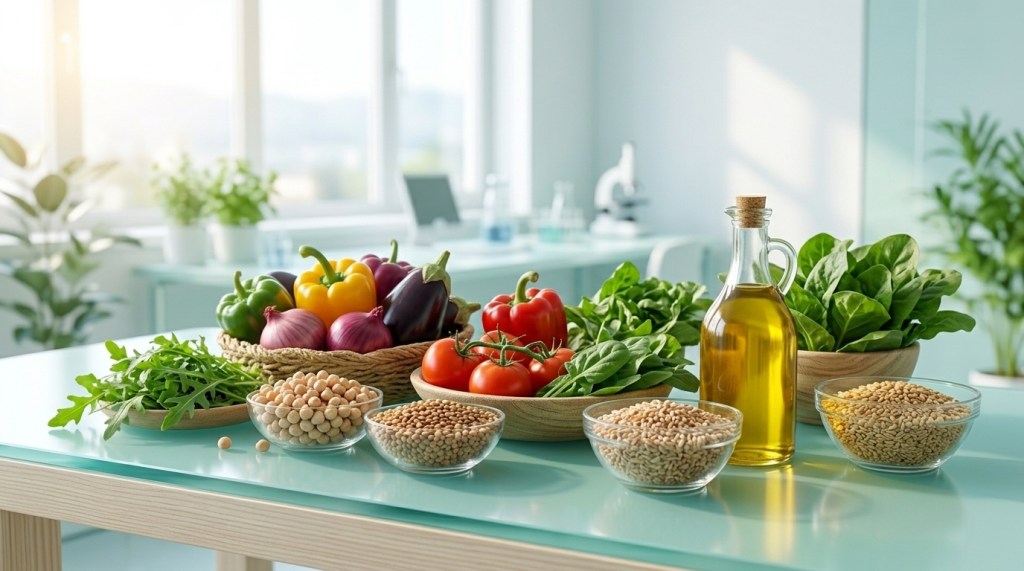
- Whole Food and Mediterranean Diets: Diets focused on abundant fruits, vegetables, whole grains, legumes, seeds, nuts, and healthy unsaturated fats like extra virgin olive oil, with moderate amounts of fish and poultry. Leading international guidelines, including those from the American Gastroenterological Association (AGA) and the European Crohn’s and Colitis Organisation (ECCO), recommend the Mediterranean diet for all IBD patients because it reduces inflammation while protecting heart and overall health.
- Fasting-Mimicking Diets (FMD): Short, 5-day monthly cycles of a calorie-reduced, plant-based diet used alongside standard medical drugs. Clinical trials show this temporary monthly tweak helps calm active Crohn’s symptoms and improves treatment response. (Discover how a 5-day monthly diet tweak calms Crohn’s).
Why This Matters to You as a Patient
If you are managing Crohn’s or colitis, this review provides a clear, empowering blueprint for your daily health:
- Scientific Proof That Your Choices Count: This study gives you the scientific proof that what you put on your plate directly influences your gut inflammation. You do not have to feel powerless; food is a modifiable tool you can use to support your recovery.
- Focus on Reversing Diet Westernisation: You do not need to follow overly restrictive or complicated rules that leave you feeling isolated or malnourished. The single most effective step you can take is to reduce industrialised, ultra-processed ready meals and fast foods, replacing them with freshly prepared whole foods.
- A Team Approach to Care: Diet is not a substitute for your prescribed biologic or targeted medications in moderate-to-severe disease, but an essential partner. You have the right to ask your gastroenterologist for access to a registered dietitian who can help tailor a whole-food eating plan specifically for your body and lifestyle.
By moving away from ultra-processed foods and embracing fresh, plant-rich whole foods, you can help calm your immune system and drive your journey toward long-term remission.
Explore the Research
- Original Review: Diet in IBD: preventive and therapeutic concepts (BMJ Gut).
- Stanford Fasting Study: Can 5 days a month fix Crohn’s? The new fasting diet that calms inflammation.
- All Diet and IBD News: All IBD Science for Patients articles related to diet and nutrition


Leave a Reply