When you live with Crohn’s disease or ulcerative colitis, maintaining a strong, healthy intestinal lining is essential for keeping symptoms at bay. The barrier lining your bowel acts as a protective shield, allowing vital nutrients from food into your bloodstream while keeping harmful bacteria safely inside your digestive tract. In people with inflammatory bowel disease (IBD), this barrier becomes damaged and leaky, driving ongoing pain, swelling, and flare-ups.
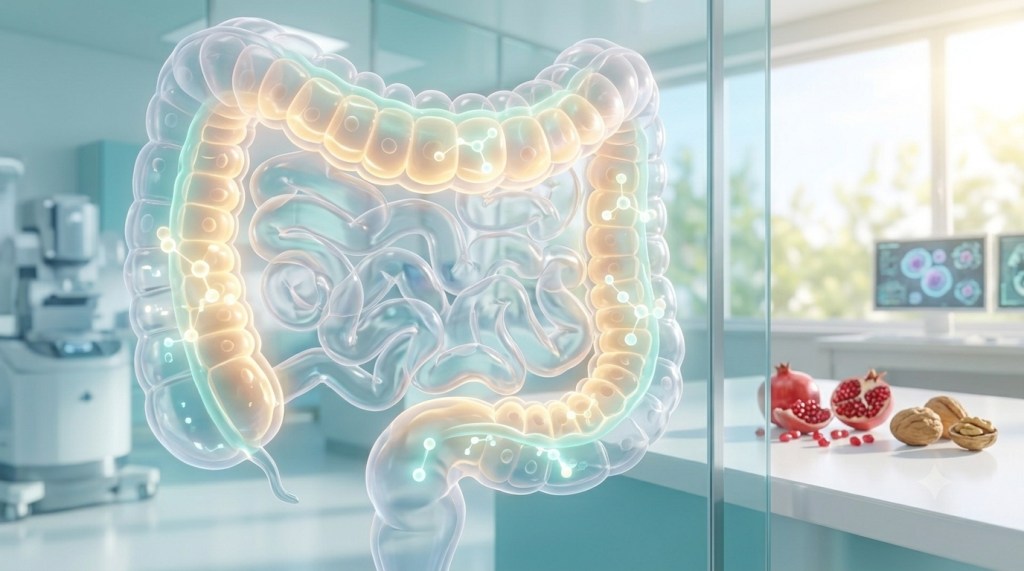
A breakthrough discovery reveals how your body turns natural compounds from foods like pomegranates, walnuts, and berries into a powerful chemical switch that repairs and strengthens your gut lining.
Demystifying the Science: How Gut Microbes Build Repair Tools
To understand how dietary choices interact with your immune system, it helps to look at the specific compounds and cellular pathways identified in the study:
- Urolithin A (UroA): A natural microbial metabolite. When you eat foods rich in natural polyphenols (such as pomegranates, strawberries, raspberries, and walnuts), friendly gut bacteria digest these nutrients and transform them into UroA.
- Aryl Hydrocarbon Receptor (AHR): A specialised protein sensor located inside intestinal cells. AHR acts like an environmental radio receiver, picking up chemical signals from your diet and gut microbes to regulate cell health.
- Intestinal Epithelial Cells (IECs): The specialised, single layer of cells that lines your entire digestive tract, forming the physical wall that protects your body from intestinal contents.
- NLRP6 Inflammasome: A microscopic protein complex inside gut cells. While “inflammasomes” are usually known for triggering damaging inflammation during infection, this study revealed that under the right conditions, NLRP6 acts as a protective defence team that repairs tissue, boosts protective mucus, and strengthens antimicrobial defences.
- 3D Human Intestinal Organoid Models: High-tech “mini-guts” grown in laboratory dishes from human tissue samples, allowing scientists to test how treatments work on living human intestinal cells without relying solely on animal models.
Inside the Research: From Cell Models to Human Tissue
This project was a pre-clinical laboratory and translational human tissue study led by Dr Venkatakrishna Rao Jala and Dr Sweta Ghosh at the University of Louisville’s Brown Cancer Center.
The research team used a rigorous, multi-stage experimental design to map how UroA repairs the gut lining:
- Cellular and Molecular Profiling: Testing how UroA interacts with AHR receptors in isolated intestinal epithelial cells.
- 3D Organoid Testing: Using human “mini-gut” organoid models to observe cell barrier repair and mucus production in real time.
- Human Patient Validation: Testing UroA directly on human intestinal tissue biopsy samples collected from adult patients living with active Crohn’s disease and ulcerative colitis.
Key Discoveries: Turning an Inflammatory Pathway into a Healing Shield
The study yielded several remarkable breakthroughs in gut biology:
- Targeted Receptor Activation: Scientists knew that activating the AHR receptor with environmental toxins caused harm, but UroA selectively activated AHR inside intestinal epithelial cells, turning on beneficial repair genes without triggering systemic toxicity.
- Reprogramming the Inflammasome: UroA prompted the NLRP6 inflammasome to release ideal, balanced levels of protective signalling molecules. Instead of causing damaging swelling, these signals strengthened tight junction proteins, thickened the protective intestinal mucus layer, and boosted natural antimicrobial defences.
- Proven Results in Human IBD Tissue: When researchers applied UroA to tissue samples taken directly from IBD patients, it successfully activated the exact same AHR-NLRP6 repair pathway observed in the laboratory models.
- A Shift Away from Broad Immune Suppression: The findings demonstrate that future IBD treatments could focus on strengthening specific cell repair mechanisms, offering an alternative to broadly suppressing the entire immune system.
Why This Matters to You as a Patient
If you are managing Crohn’s disease or ulcerative colitis, this research brings inspiring, practical hope for your health journey:
- Proof That Wholesome Foods Drive Real Biology: This study proves that eating whole foods like pomegranates, walnuts, and berries allows your gut microbes to manufacture real, therapeutic compounds that actively repair your intestinal lining.
- A New Frontier of Targeted Healing: Discovering that natural microbial compounds can switch on cellular repair mechanisms without broad immune suppression paves the way for gentler, highly targeted therapies in the future.
- Empowerment Through Balanced Nutrition: While eating pomegranates or walnuts cannot replace your prescribed medical treatments, incorporating a variety of colourful, antioxidant-rich foods into your daily routine supports your friendly gut bacteria. You can discuss building a balanced eating strategy with your specialist nurse or dietitian.
By harnessing the power of natural compounds and gut microbes, science is unlocking new ways to reinforce your intestinal shield and keep your journey toward health on track.
Explore the Research
- Original Journal Paper: Urolithin A activates AHR-NLRP6 pathways to strengthen gut barrier integrity.
- News Report: Scientists find a natural gut compound that helps heal the intestine.


Leave a Reply