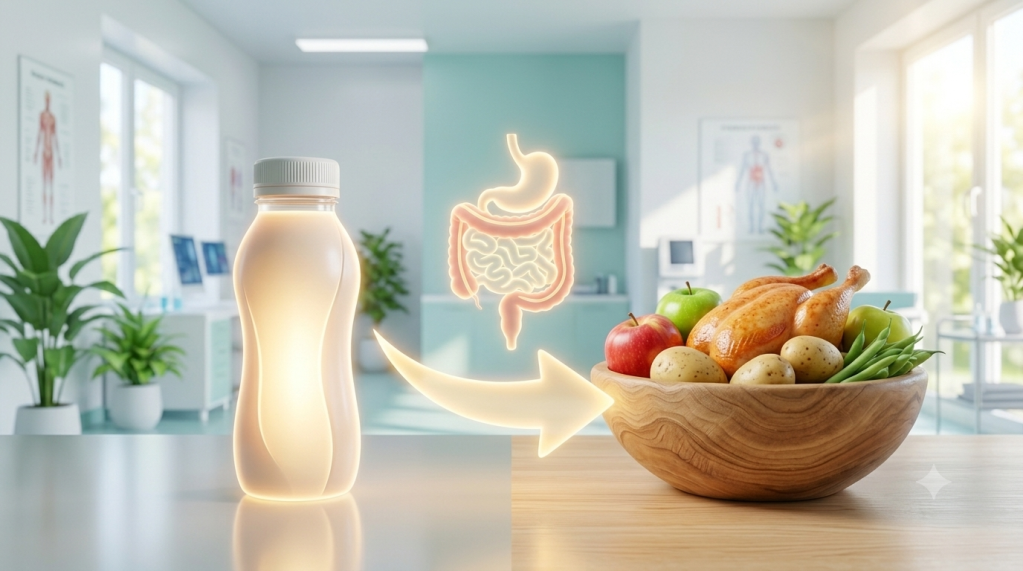
When a child is first diagnosed with Crohn’s disease, doctors often recommend a treatment called Exclusive Enteral Nutrition (EEN). This involves a strictly liquid-only diet- -drinking special nutritional shakes instead of eating food for several weeks. While it works incredibly well to calm inflammation, sticking to a “no-food” rule can be very tough for young people.
Now, a new study, published in July 2026, has compared this liquid standard to a newer option: the Crohn’s Disease Exclusion Diet (CDED). This “food-based” diet allows certain whole foods alongside some nutritional shakes, and the results are very promising.
What the Research Found
This was a focused prospective study involving 66 young patients (aged 6 to 19) in Central Europe. The researchers compared 33 children who followed the traditional liquid-only diet (EEN) with 33 children who followed the newer food-plus-shakes diet (CDED) over a one-year period.
By the six-week mark, here is how the two groups compared:
- Feeling Better (Clinical Response): Both diets worked roughly the same. About 76% of those on the food-based diet felt significantly better, compared to 82% on the liquid diet.
- Healing the Gut (Mucosal Healing): This is when the inflammation actually clears up in the gut lining. Interestingly, 48% of the children on the food diet achieved healing, compared to 33% on the liquid shakes.
- Staying Well (Relapse): Both groups had similar success in staying in remission over the full year.
The researchers concluded that the food-based diet is a “suitable treatment option” and works just as well as the liquid-only version in real-world hospital settings.
Why This Matters to You as a Patient
If you are a young person (or a parent of one) dealing with a new Crohn’s diagnosis, this research provides vital evidence that you have choices.
- More Freedom: The biggest struggle with the liquid-only diet is how hard it is to stick to it when everyone around you is eating. This study proves that a “partial” shake diet that allows real food (CDED) is just as effective at healing the gut.
- Lowering the Risk of Flares: The study found that children who had very high inflammation scores when they were first diagnosed were at a higher risk of having a flare-up later, regardless of which diet they chose. This highlights why it is so important to catch and treat Crohn’s early.
- Building a Plan that Fits Your Life: Knowing that the exclusion diet works in different parts of the world, not just where it was first invented, means more doctors may feel confident offering it as a first-line treatment.
Whether it’s a 5-day monthly “fasting” tweak or a long-term exclusion plan, diet-based treatments are becoming a powerful tool alongside standard medicines to help you take control of your health.
Explore the Research
- Original Study: Comparison of CDED and EEN in paediatric Crohn’s disease.
- Related Reading: A 5-day diet that helps Crohn’s patients feel better fast.
- Dietary Clues: Why red meat might worsen IBD symptoms.


Leave a Reply