For the 300,000 people in the UK living with inflammatory bowel disease (IBD), current treatments can sometimes feel like using a sledgehammer to crack a nut. Biologics and steroids are powerful, but they often dampen the entire immune system, leading to side effects. Now, researchers at McMaster University have developed a futuristic “lock-and-key” treatment that uses friendly viruses to target only the bad bacteria in your gut while leaving the good ones alone.
What are Phages?
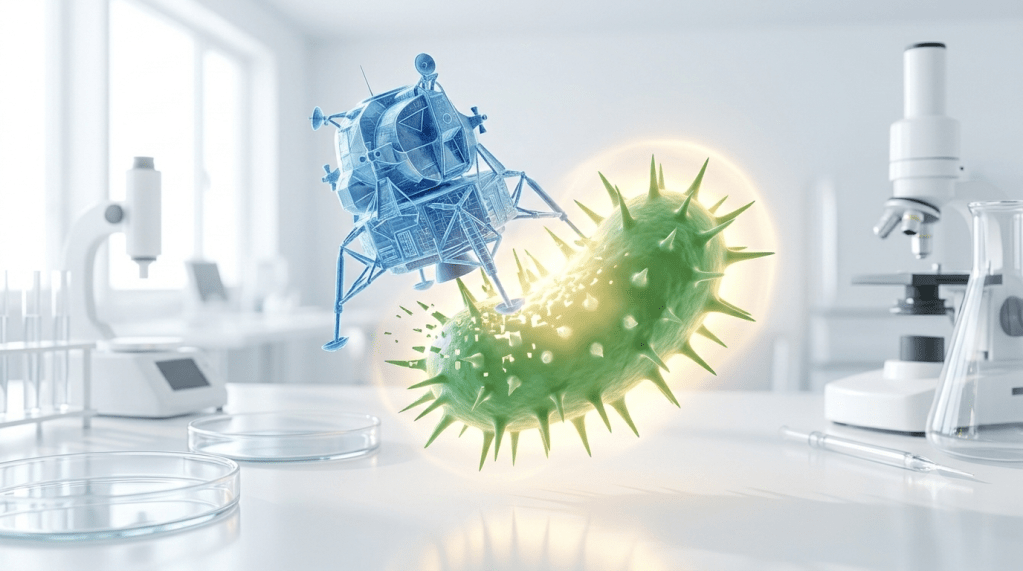
The “friendly viruses” are called bacteriophages (or “phages” for short). Phages are naturally occurring viruses that only infect bacteria. They are incredibly picky: each phage is designed to attack one specific type of bacteria, much like a key that only fits one lock.
What the Research Found
In a study published in the journal Science Translational Medicine, scientists focused on a specific type of E. coli bacteria called AIEC. These “bad” bacteria are often found in people with Crohn’s disease and use molecular “grappling hooks” to attach to the gut wall, triggering painful inflammation.
Instead of just killing all the bacteria in the gut, the phages did something cleverer:
- Disarming the Enemy: The phages knocked out the bacteria’s “grappling hooks”. The researchers compared it to “knocking out a few teeth” – the bacteria are still there, but they can no longer cause damage or trigger inflammation.
- A Super-Boost for Medicine: The team discovered that when they used these phages alongside a low dose of steroids, it worked just as well as a massive dose of steroids on its own.
- Protecting the Microbiome: Because phages are so targeted, they didn’t harm the “good” bacteria that keep your digestive system healthy.
Study Scale and Duration
This was a detailed laboratory and experimental model study that took several years of collaboration between engineers and health scientists. The researchers used E. coli samples taken directly from human Crohn’s patients to ensure the phages were attacking the right targets. While it has not yet reached large-scale human trials, the results were so successful that the project was featured on the front cover of its scientific journal.
Why This Matters to You as a Patient
If you have ever worried about the long-term side effects of your medication, this research offers a glimpse into a more personalised future of care:
- Precision Medicine: In the future, a doctor might test your stool to see if you have these specific “bad” E. coli. If you do, they could give you a phage “key” designed specifically for your gut, rather than a drug that affects your whole body.
- Lowering Drug Doses: The fact that phages make steroids work better means patients might one day be able to take much lower doses of steroids, reducing the risk of weight gain, mood swings, and bone thinning.
- A New Tool for “Stubborn” Crohn’s: For patients who find that standard biologics stop working, phage therapy provides a completely different biological way to “switch off” a flare-up.
Explore the Research
- Original Research: Phage intervention improves colitis and response to corticosteroids.
- News Update: McMaster researchers develop targeted phage therapy for IBD.
- Related Reading: How the gut microbiome shapes your health.


Leave a Reply