For many people living with Crohn’s disease, surgery is a necessary part of the journey toward health. One of the most difficult situations a surgeon can face is finding an intraoperative abscess – a hidden collection of infection – inside the abdomen during an operation. This situation is often called a “hostile abdomen” because the inflammation and infection make the surgery much more complicated.
A new study published in July has investigated whether it is safe for surgeons to join the bowel back together in these tricky cases, or whether it is better to give the patient a temporary stoma.
What the Research Found
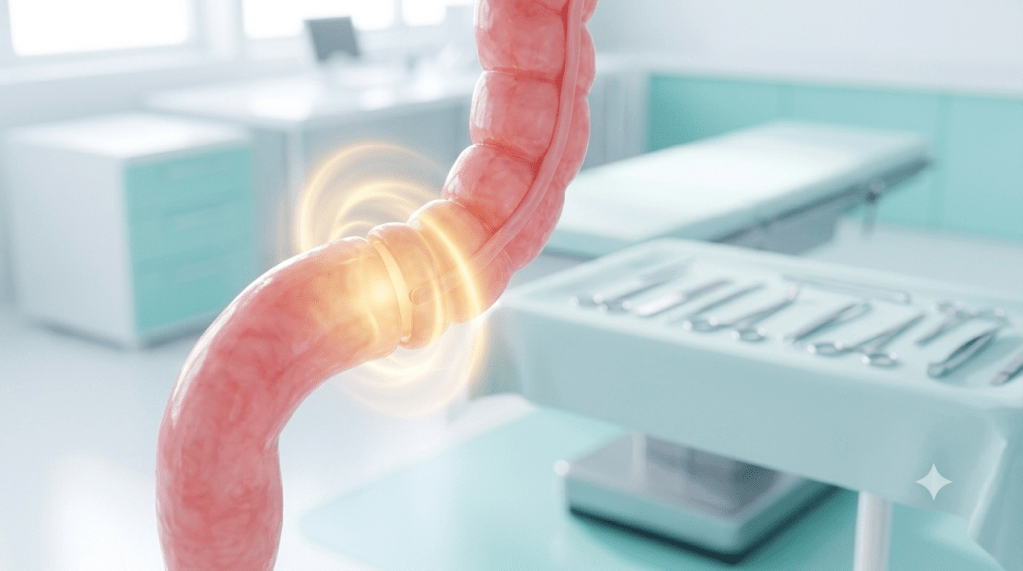
Traditionally, many surgeons were worried that joining the bowel (creating an anastomosis) while an infection was present would lead to a “leak,” which can be very dangerous. Because of this, they would often perform a diversion, where the bowel is brought to the surface of the skin as a stoma to let the area heal.
This multicentre study looked at the outcomes of patients who had an abscess found during their operation. The researchers discovered:
- Safety of Joining: In many cases, performing a primary anastomosis (joining the bowel straight away) was just as safe as giving the patient a stoma, provided the infection was properly cleaned and drained.
- No Increase in Leaks: The study found that patients who had their bowel joined did not have a significantly higher risk of serious complications compared to those who were given a stoma, as long as they were carefully selected for the procedure.
- Successful Healing: For those who were healthy enough for the join, it meant they could avoid having a second operation later to close a stoma, making their recovery journey smoother.
Study Scale and Details
This was a medium to large scale multicentre study involving data from several different specialist hospitals. By looking at a large group of real-world patients over several years, the researchers were able to find patterns that a single hospital might miss. This type of research is considered very reliable for helping surgeons make life-changing decisions.
Why This Matters to You as a Patient
If you are facing surgery for Crohn’s disease, this research is a big step toward shared decision-making.
- More Options: In the past, finding an abscess almost always meant you would wake up with a stoma. This study gives you the scientific proof that, in the right hands and the right conditions, joining the bowel might still be an option for you.
- Fewer Operations: If a surgeon can safely perform an anastomosis the first time, it means you won’t need a reversal surgery months later. This reduces your total time in hospital and helps you get back to living well sooner.
- Personalised Surgery: Every patient is different. This research helps your surgical team decide which approach is the safest and best for your specific body.
While surgery can be scary, knowing that surgeons have better data to guide their choices can help you feel more in control of your journey toward health.
Explore the Research
- Original Study: The safety of primary anastomosis in Crohn’s disease.
- Related Recovery News: How AI is being used to predict your recovery path after surgery.


Leave a Reply